THE JAPAN RAIL PASS: Your Expert Guide to Buying, Activating, and Maximizing Value
The Japan Rail Pass (JR Pass) is the most sought-after ticket for seamless travel across Japan. It offers unlimited travel on the vast, world-class network of Japan Railways (JR), including the lightning-fast Shinkansen. Designed exclusively for tourists entering Japan under the ‘Temporary Visitor’ status, the JR Pass is the gateway to experiencing major destinations like Tokyo, Kyoto, Osaka, and Hiroshima without the hassle—or high cost—of individual high-speed tickets. Our expert guide details exactly how to buy it, activate it, and, most importantly, determine if it’s still worth the cost after recent price changes.
Plan your trip to Japan
The Big Question: Is the JR Pass Worth the Price Hike?
Since the significant price increase in late 2023, the JR Pass is no longer automatically a money-saver. The decision now depends entirely on your itinerary and pace of travel. As Japan Specialists, we’ve broken down the calculation to help you decide.
When the JR Pass IS Worth It (The Golden Rule)
The Pass is highly cost-effective if you plan on making at least two to three long-distance Shinkansen trips within the 7, 14, or 21-day validity period. The price of two round-trip high-speed tickets (e.g., Tokyo to Kyoto, and Kyoto to Hiroshima) often exceeds the cost of the 7-day Pass.
The Pass is your best investment for these classic routes:
- 7-Day Sprint: Tokyo ➡️ Kyoto ➡️ Hiroshima ➡️ Tokyo
- 14-Day Deep Dive: Tokyo ➡️ Takayama ➡️ Kyoto ➡️ Osaka ➡️ Fukuoka
If your trip focuses on a single region (e.g., only the Kansai area) or involves very slow travel, individual tickets may be cheaper. For movement within cities like Tokyo or Osaka, the Suica or Pasmo IC cards are the mandatory, simpler solution, as the Pass is less useful for subway lines.
Choosing Your Pass: National vs. Regional & Green Car
The core offering is the National JR Pass, available for 7, 14, or 21 consecutive days. You must activate the pass for a specific start date, and it cannot be paused.
The National JR Pass is offered in two tiers to suit different travel styles and budgets: Ordinary Pass and Green Pass.
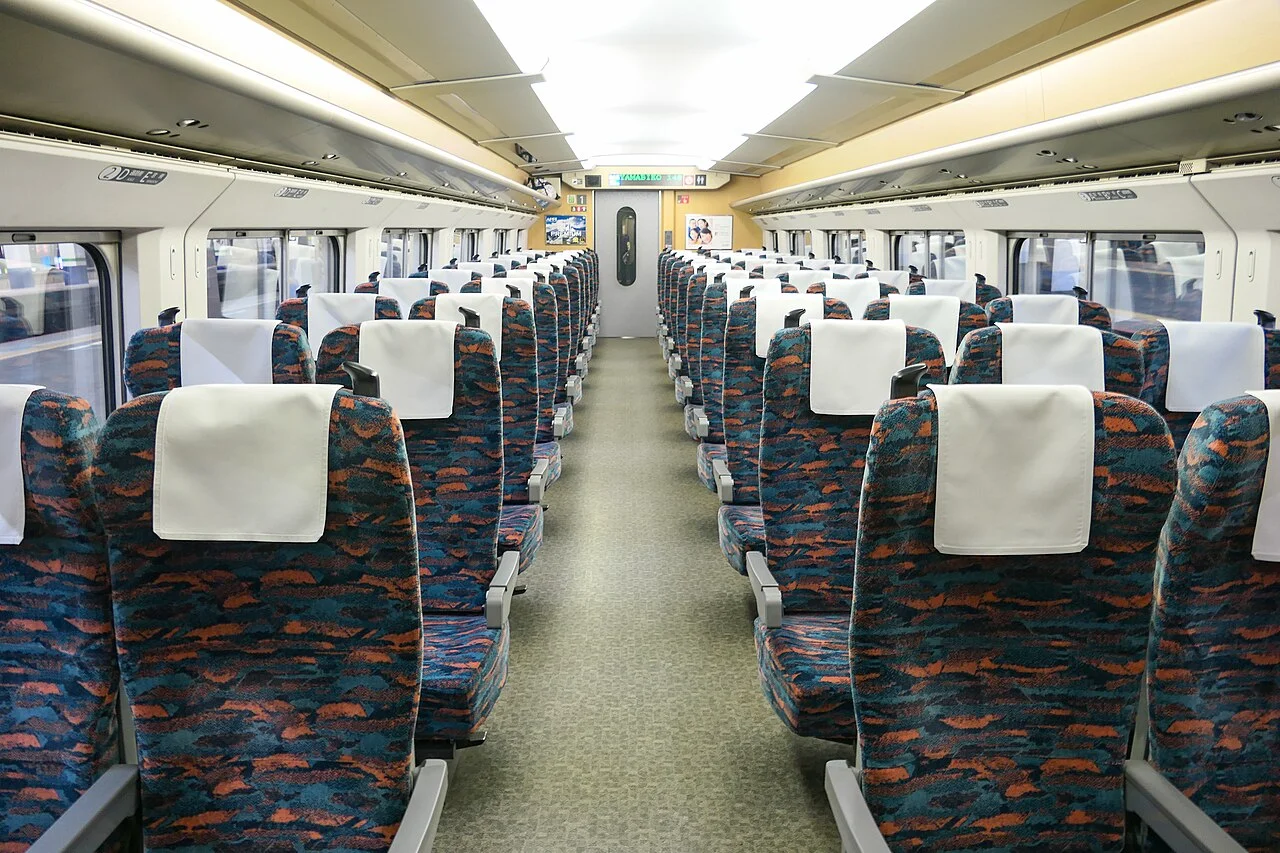
The Ordinary Pass (available for 7, 14, or 21 days) is perfect for most budget-conscious travelers; the seats are already spacious and comfortable, meeting high standards. The Green Pass (First Class), also available in the same durations, caters to luxury travelers. Green Car passengers benefit from wider seats (in a 2x2 configuration), significantly more legroom, and a higher chance of securing a seat reservation, which is a great advantage during Japan's peak travel season
The Importance of Regional Passes
For focused travel—for instance, only exploring the Kansai area (Osaka, Kyoto, Nara)—you may save more by purchasing a Regional JR Pass (e.g., JR Kansai Area Pass or JR East Pass). These passes offer coverage for shorter distances at a significantly lower cost, a key insight for expert trip planning.
Coverage: Trains, Buses, and the Big Exclusions
The JR Pass covers virtually all JR Group trains, but travelers must be aware of the fast-track exclusions
The Shinkansen Trains NOT Covered (Crucial Warning)
The JR Pass DOES NOT COVER the two fastest, premium Shinkansen services on their respective lines:
- Nozomi: The fastest train on the Tokaido and Sanyo Shinkansen (the main route connecting Tokyo, Kyoto, and Hiroshima).
- Mizuho: The fastest train on the Kyushu Shinkansen (Fukuoka to Kagoshima).
If you accidentally board one of these trains, your pass will be invalid for that journey, and you will be required to pay the full fare. Always aim for the Hikari or Sakura Shinkansen services; they are only slightly slower and ARE fully covered.
Beyond the Rails: Included Non-Train Services
The Pass provides valuable coverage for more than just trains:
- City Travel: All JR local lines in cities, including the essential JR Yamanote Line loop in Tokyo.
- Ferry: The JR-operated ferry to Miyajima Island (Hiroshima), famous for the floating Torii gate.
- Buses: Select JR local bus lines (e.g., the local JR bus loop in Hiroshima, crucial for accessing certain sites).
Nuki's Corner!
#Japan Rail Pass vs Suica/Pasmo


The Logistical Steps: Buying, Exchanging, and Reserving
Acquiring and activating the JR Pass requires a few key steps that must be done in the correct order. The Pass is strictly personal and non-transferable.
Step 1: Purchasing the Exchange Order (Before Arrival)
You must purchase an Exchange Order before arriving in Japan. This can be done through authorized vendors. This order is a voucher that must be exchanged for the actual pass once you arrive. You have 90 days from the purchase date to make the exchange.
Step 2: Exchange and Activation in Japan
Upon arrival, head to a major JR Ticket Office (Midori no Madoguchi). These are conveniently located at major airports (Narita, Haneda) and key stations (Tokyo, Kyoto, Shinjuku).
You will need: Your Passport and the Temporary Visitor Stamp/Sticker (check that immigration gives you this). When exchanging, you will specify the activation start date. This is flexible; you can activate it days after you arrive to maximize its use for long-distance travel.
Seat Reservations and Traveling with Luggage
The JR Pass covers both reserved and non-reserved seating. We strongly recommend making seat reservations for all Shinkansen journeys, especially when traveling in a group or during peak season (Golden Week, Obon). You can do this for free at any JR Ticket Office or via automated ticket machines.
Expert Tip on Luggage: If traveling with oversized luggage (total dimensions over 160 cm), you MUST make a prior reservation for the designated oversized luggage area on the Shinkansen. Failure to do so can result in a fine and forced storage.
Conclusion: Your Ultimate Travel Companion
The Japan Rail Pass remains the most efficient, comfortable, and often the most economical way to experience the country’s wonders. It streamlines your journey, allowing you to focus on the sights rather than ticket logistics. Plan your itinerary strategically to leverage those high-speed journeys and make the most of your unlimited access to the world's most punctual railway.