Fushimi Inari Taisha – Kyoto’s iconic thousand torii shrine - Kyoto
Discover Fushimi Inari Taisha – Kyoto’s iconic thousand torii shrine
Overview
Fushimi Inari Taisha is one of Kyoto’s most important and instantly recognisable Shinto shrines, located at the base of Mount Inari. It is dedicated to Inari, the deity of rice, prosperity and business success, which explains why you’ll see countless smaller shrines and offerings from individuals and companies across Japan.
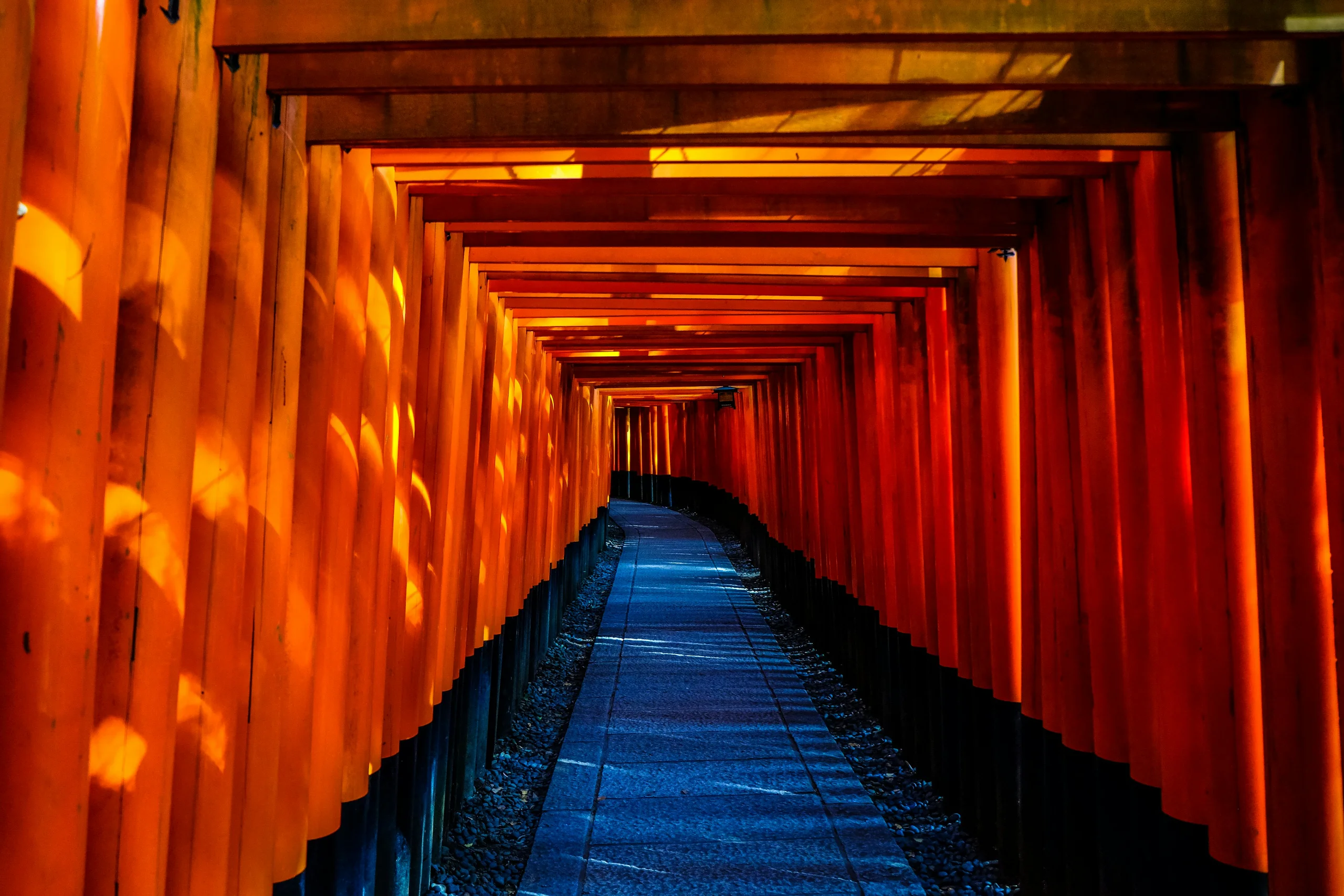
What makes this place truly unique is the path that leads from the main shrine up the mountain, formed by thousands of vermilion torii gates donated over centuries. The experience is not just about the shrine itself, but about walking through these endless gates as they wind through forested trails, gradually becoming quieter and more atmospheric the higher you go.
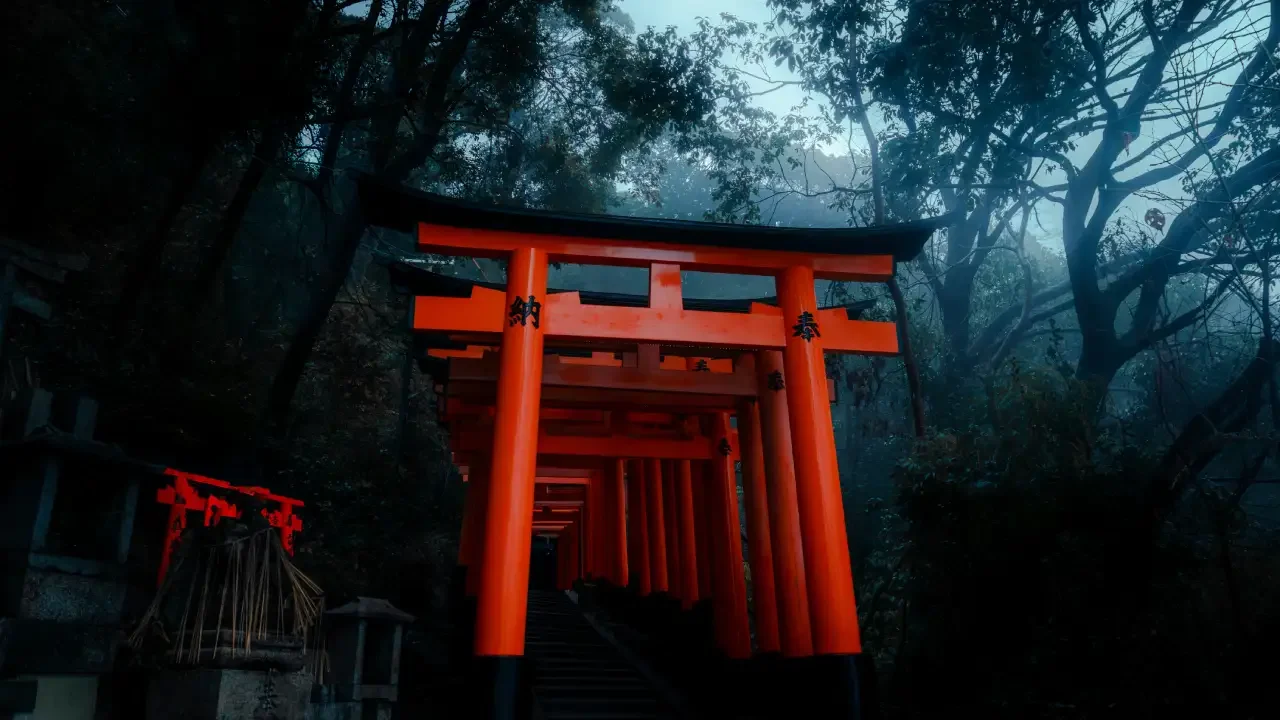
Photo by Chrishaun Byrom: https://unsplash.com/es/@chrishaun
Despite its fame, Fushimi Inari still feels like an active place of worship rather than a tourist attraction. Locals come to pray, hikers use it as a scenic route, and visitors find a mix of culture, nature and spirituality in a single visit.
Why Visit Fushimi Inari Taisha
Fushimi Inari Taisha is worth visiting because it offers something you rarely find in other temples or shrines in Japan: a fully immersive walking experience through thousands of torii gates that stretch deep into the mountain. It is not just a quick stop, but a place where the journey itself is the attraction.
Nuki's Corner!
#What is a Torii Gate?

A torii is a traditional Japanese gate that marks the entrance to a sacred space, usually a Shinto shrine. It symbolically separates the everyday world from the spiritual one, which is why you’ll see thousands of them at Fushimi Inari Taisha.

One of the main reasons people come here is the atmosphere. The combination of dense forest, winding paths and endless red gates creates a sense of rhythm and repetition that feels almost meditative as you move away from the crowds at the base. The further you go, the quieter it becomes, and the experience shifts from tourist spot to something much more personal.
It is also one of the most photogenic and recognisable places in Kyoto, but what often surprises visitors is that it is much larger and more layered than expected. You can stay for a short visit around the main shrine, or spend hours hiking up Mount Inari discovering smaller sub-shrines along the way.
Highlights & Must-See Areas
At Fushimi Inari Taisha, the experience is spread across several key areas, and knowing where to focus helps you get the most out of your visit without feeling rushed or lost in the crowds.
The most iconic spot is the Senbon Torii, the famous tunnel of thousands of vermilion gates just behind the main shrine buildings. This is the image most people associate with Kyoto, and while it gets busy, it is still impressive to walk through at a slower pace once you move past the initial entrance.
Around the base you’ll find the Main Shrine Complex, where locals come to pray and make offerings. This area feels more grounded and traditional, offering a contrast to the more visually striking mountain paths. It’s also where you can observe everyday worship practices taking place.
As you start the climb, the route splits into a loop through the mountain. Along the way you’ll encounter smaller shrines, stone fox statues, and resting points. One of the most rewarding sections is the mid-mountain viewpoints, where the gates thin out and you get quiet breaks from the crowds.
Higher up, the atmosphere changes completely. The upper trails toward the summit of Mount Inari are much less visited, offering a more peaceful and almost secluded experience, especially early in the morning or later in the day.
The Thousand Torii Gates Trail
The Thousand Torii Gates Trail is the defining experience of Fushimi Inari Taisha and the reason most visitors come here. The path begins right behind the main shrine buildings, where the first dense corridor of vermilion gates immediately creates a striking visual tunnel that feels almost unreal in person.
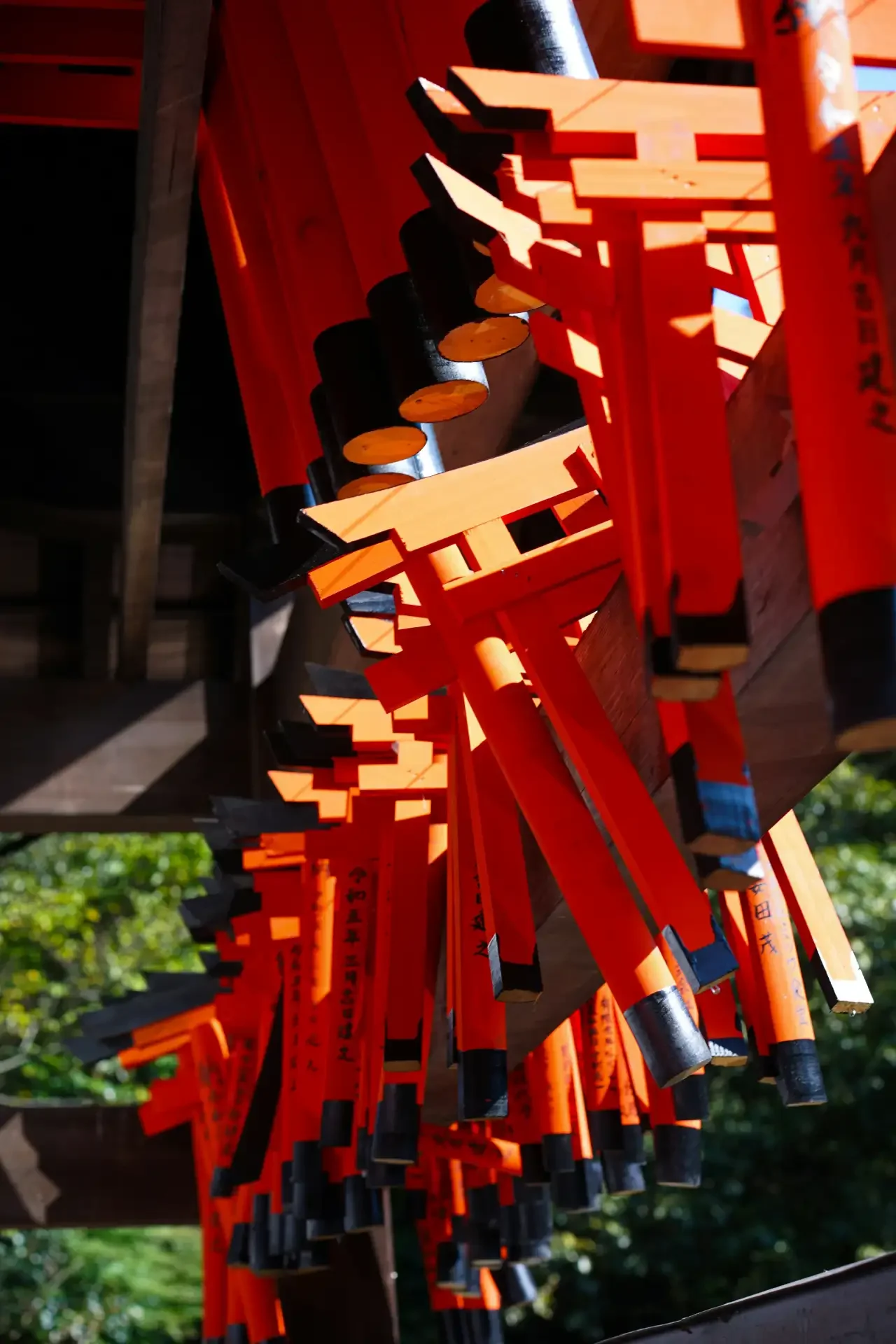
These gates, known as torii, have been donated over centuries by individuals and businesses as a form of prayer for success and prosperity. Each one is engraved with names and dates, which gives the trail a quiet sense of history as you walk through it. The repetition of the gates creates a rhythm that changes depending on the light, the time of day, and how far you go into the mountain.
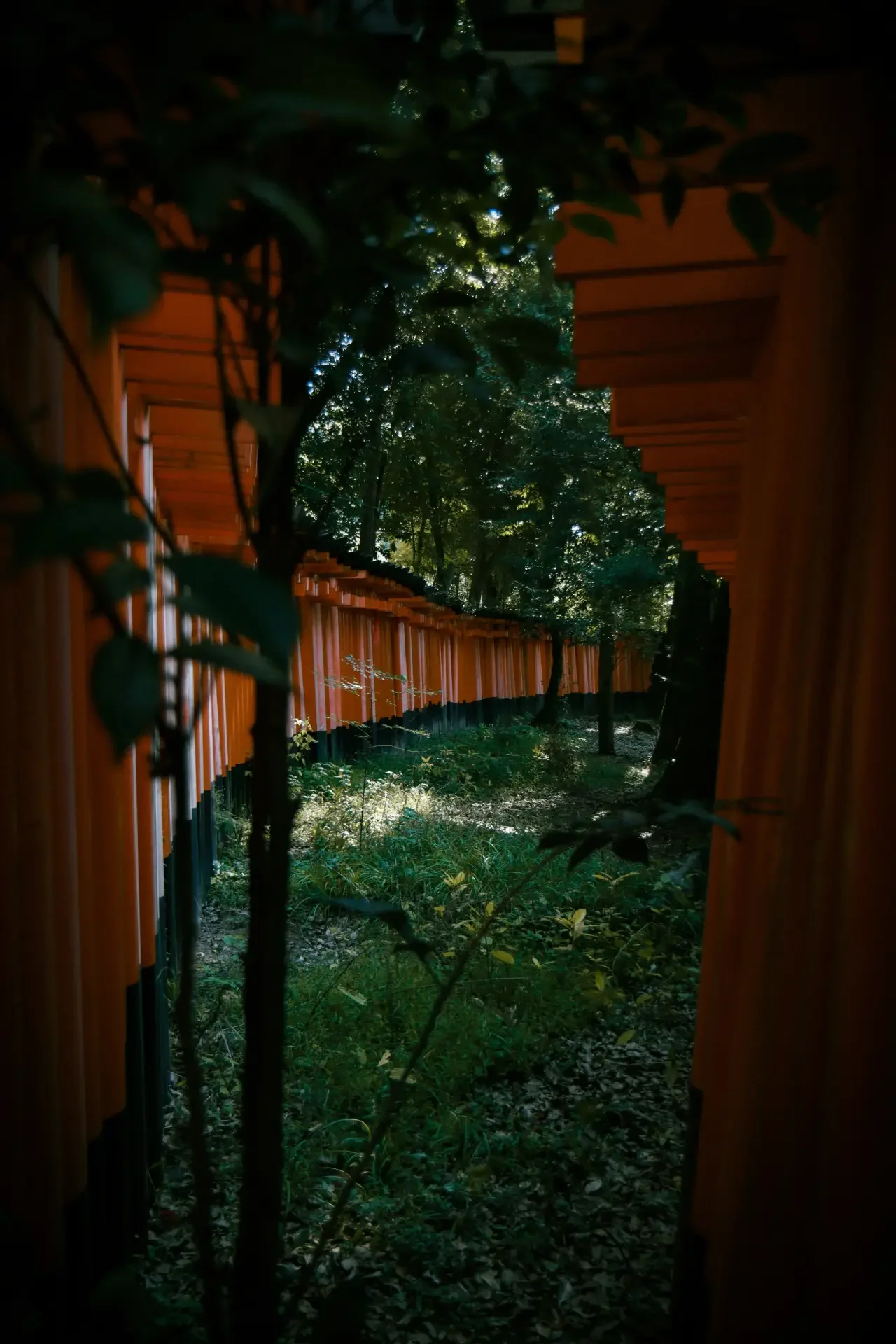
As you continue along the trail, the crowd gradually disperses and the atmosphere becomes more natural and peaceful. The path splits into different routes around Mount Inari, allowing you to loop sections or continue climbing higher.
The further you go, the more the forest begins to dominate the experience, with the gates blending into the landscape rather than defining it.
It’s not just a photo spot, but a continuous walking route that evolves as you move, making it one of the most immersive shrine experiences in Japan.
Main Shrine Area
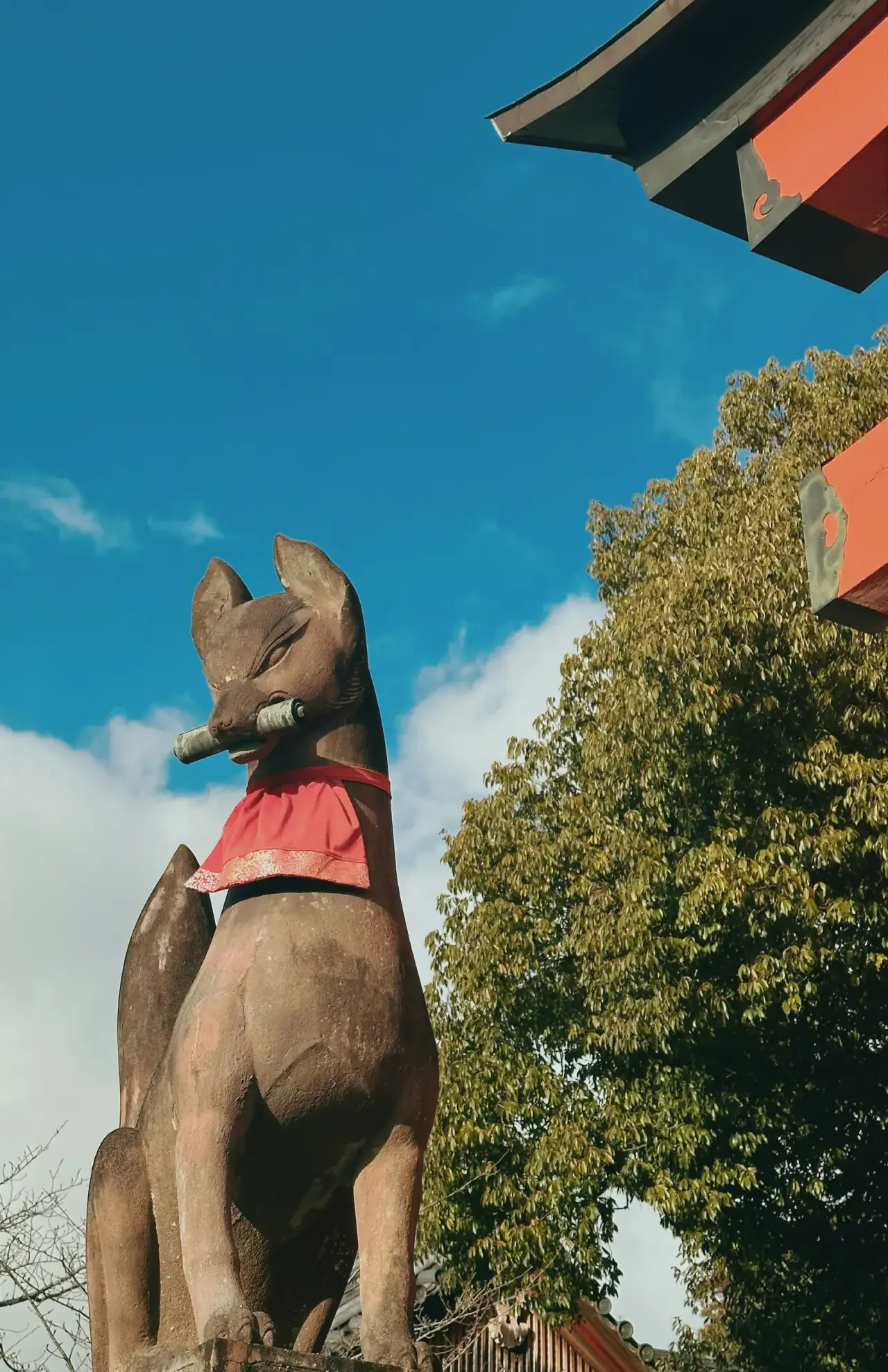
The Main Shrine Area of Fushimi Inari Taisha is the most traditional and grounded part of the complex, and where most visitors begin their experience before heading into the mountain trails.
Here you’ll find the main hall, where people come to pray for prosperity, business success and good fortune. Unlike the more visually dramatic torii paths, this area feels calmer and more structured, with open courtyards, stone lanterns and ritual spaces that are still actively used by locals.
One of the most distinctive elements here is the presence of fox statues (kitsune), considered messengers of Inari. Many of them hold symbolic objects like keys or scrolls in their mouths, representing protection and abundance.
You’ll notice them throughout the grounds, often paired in symmetrical arrangements.
This section is also where you can better understand the spiritual side of the shrine before transitioning into the more scenic hiking experience. It works as a clear introduction to the culture and rituals behind the mountain trails, giving context to everything you see further up.
Hiking to the Summit
The Hiking to the Summit experience at Fushimi Inari Taisha is where the visit shifts from shrine exploration to a full mountain walk. From the main complex, the path gradually climbs Mount Inari through a network of torii-lined trails, stone steps and forest paths that feel increasingly quiet as you gain elevation.
The hike is not technically difficult, but it is longer and more demanding than most visitors expect. The full loop to the summit and back can take around two to three hours depending on pace and stops. Along the way, you’ll pass smaller sub-shrines, water stations and resting points that break up the climb naturally.
As you go higher, the density of visitors drops significantly and the atmosphere becomes much more peaceful. The gates appear more spaced out, and sections of natural forest start to dominate the experience. This contrast is part of what makes the hike special, as it gradually transitions from a busy cultural site to a quiet mountain trail.
Reaching the summit is less about a dramatic viewpoint and more about the sense of completion after walking through the entire sacred mountain system, which is what makes this route memorable rather than just scenic.
Best Time to Visit
The Best Time to Visit Fushimi Inari Taisha is early in the morning or later in the afternoon, when the atmosphere is noticeably calmer and the light enhances the contrast of the red torii gates against the surrounding forest.
Visiting early morning (before 8:00) is the most recommended option if you want to experience the shrine with fewer crowds. At this time, the main paths feel much more peaceful, and the walk through the lower sections of the mountain is far more immersive. It also allows you to enjoy the site at a slower pace before tour groups arrive.
The late afternoon (after 16:00) is another strong option, especially for photography. The softer light filters through the gates and trees, creating a more atmospheric and cinematic feel. However, it can still be moderately busy depending on the season.
Midday tends to be the busiest period, with heavy foot traffic concentrated around the main shrine and the entrance to the torii trails. If you only have this time available, it’s still worth visiting, but the experience will feel more crowded and less reflective as you go deeper into the paths.
How to Get There
To reach Fushimi Inari Taisha, the easiest and most convenient option is by train, as the shrine is directly connected to Kyoto’s main transport network.
The most straightforward route is via the JR Nara Line, getting off at Inari Station, which is located right in front of the main entrance. The ride from Kyoto Station takes only a few minutes, making it one of the most accessible major attractions in the city.
Another option is using the Keihan Main Line, stopping at Fushimi-Inari Station, which is about a 5-minute walk to the shrine. This route can be useful depending on where you are staying in Kyoto, especially if you are closer to the eastern side of the city.
Once you arrive, the entrance is clearly visible and well signposted, and you will immediately see the start of the shrine complex and the first torii gates. Because of its location and simple access, it’s a place that fits easily into any Kyoto itinerary without requiring complex transfers or long travel time.
Entrance & Opening Info
The access to Fushimi Inari Taisha is completely open, as it is not a gated attraction but an active shrine and public mountain area. This means you can enter freely at any time of the day, with no ticket required.
The main shrine grounds and torii paths are open 24 hours, which is one of the reasons it is so popular for early morning and evening visits. However, while you can technically access the area at night, the experience changes significantly due to limited lighting along the mountain trails.
There is no entrance fee, making it one of the most accessible cultural landmarks in Kyoto. Facilities such as restrooms and small shops are located mainly near the base of the shrine, and their operating hours are more limited, typically aligned with daytime activity.
For the best experience, it is still recommended to visit during daylight hours, as this allows you to fully appreciate both the shrine complex and the mountain paths in safe and comfortable conditions.
Estimated Visit Duration
The time you need at Fushimi Inari Taisha depends a lot on how deep you want to go into the mountain trails and how much of the experience you want to explore beyond the main shrine area.
A quick visit (45 to 60 minutes) is enough if you only plan to see the main shrine complex and walk through the initial section of the torii gates, including the famous entrance tunnel. This is the most common option for travelers with tight itineraries.
A standard visit (1.5 to 2.5 hours) allows you to enjoy the main highlights at a more relaxed pace and continue partway up Mount Inari. This is the most balanced option for most visitors, giving you both the shrine atmosphere and a taste of the hiking experience.
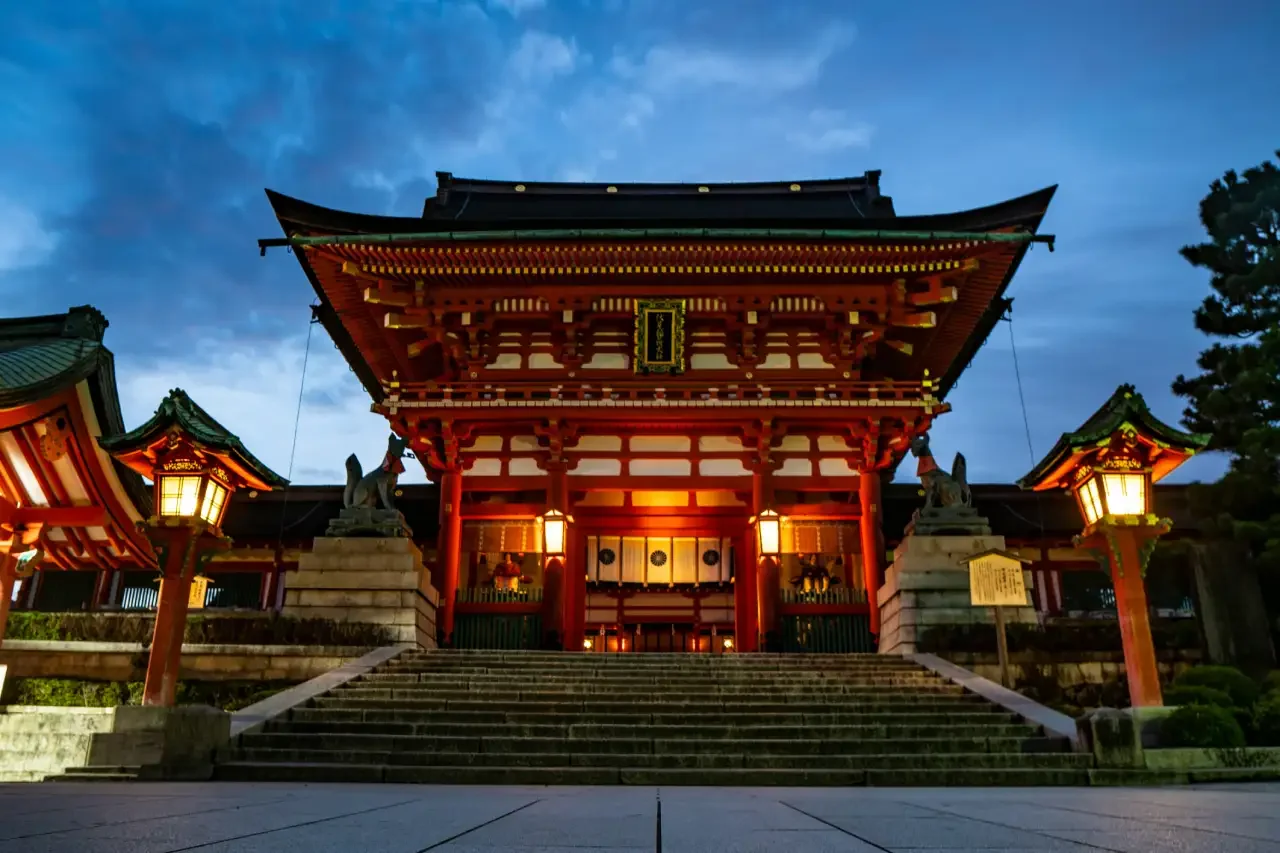
Photo by Shai Pal: https://unsplash.com/@shaipal
If you choose to complete the full hike to the summit and back, you should plan for 2.5 to 3.5 hours or more, depending on your pace and the number of stops. This option is less about rushing and more about enjoying the gradual transition from busy shrine to quiet forest paths.
Overall, the visit is flexible, but it’s worth allocating more time than expected, as the experience naturally expands the further you go into the mountain.
Tips for First-Time Visitors
At Fushimi Inari Taisha, a few simple habits can make a big difference in how you experience the visit, especially if it’s your first time in Kyoto.
One of the most important tips is to go early or late in the day. The shrine is beautiful at any time, but it changes completely when the crowds thin out. Early morning offers a quieter, more atmospheric walk through the torii gates, while late afternoon gives softer light and a more cinematic feel.
It’s also worth remembering that this is not just a sightseeing spot but an active place of worship. You’ll notice people praying at the main shrine, so it’s important to be respectful, keep noise low, and avoid blocking pathways, especially around the entrance area.
Another key tip is to not rush the experience through the torii gates. Many visitors turn back early, but even a short climb already rewards you with quieter paths and a completely different atmosphere. If you have the time, continuing further up the mountain is where the experience really opens up.
Finally, wear comfortable shoes. The paths are well maintained but include long stair sections and uneven terrain. Even a short visit can involve more walking than expected, especially if you decide to explore beyond the main shrine area.
Things to Know Before You Go
Before visiting Fushimi Inari Taisha, it helps to understand a few practical details that can improve your experience and avoid common surprises.
First, the site is completely free to enter and open 24 hours, which makes it very flexible, but also means that facilities are limited outside daytime hours. Shops, rest areas and services are mainly concentrated near the base of the shrine and tend to close in the evening.
It’s also important to know that the experience changes significantly depending on how far you go. The lower torii gates are the busiest section, especially right after the entrance, while the upper mountain trails become progressively quieter and more natural. Many visitors underestimate the size of the area and only explore the first section.
There is no strict closing time or ticket system, but the mountain paths are not fully lit at night, so evening visits are more atmospheric than practical for hiking. If you plan to go higher, daylight is strongly recommended.
Finally, expect a mix of tourism and local worship activity. You’ll see people praying, small ceremonies taking place, and visitors taking photos all in the same space. It’s a place where religious tradition and tourism coexist closely, so a respectful attitude goes a long way in making the visit smoother.
Nearby Attractions
Near Fushimi Inari Taisha, there are several interesting areas that can easily be combined with your visit, especially if you’re planning a half-day or full-day itinerary in southern Kyoto.
Very close by is the Fushimi Sake District, known for its traditional breweries and historic streets. It’s a great place to explore after visiting the shrine, especially if you want a slower, more local atmosphere with small shops and tasting experiences.

Related Article
A short train ride away, you’ll find Tōfuku-ji Temple, one of Kyoto’s most impressive Zen temples, especially famous during autumn foliage season. It offers a very different experience compared to Inari, with large wooden halls, gardens and quiet walking paths.
Also nearby is the Kiyomizu-dera area, one of Kyoto’s most iconic districts. While it requires a bit more travel, it pairs well with Fushimi Inari if you are planning to explore eastern Kyoto in the same day.
If you prefer something more relaxed, the surrounding Higashiyama and Gion areas are also accessible and offer traditional streets, tea houses and a more atmospheric end to your day after the hike through the torii gates.
Related articles
No related articles yet.
About Fushimi Inari Taisha
Quick facts
Location
Lat: 34.967100 Long: 135.772700
Opening hours
- Monday: Open 24 hours
- Tuesday: Open 24 hours
- Wednesday: Open 24 hours
- Thursday: Open 24 hours
- Friday: Open 24 hours
- Saturday: Open 24 hours
- Sunday: Open 24 hours
Price
- Free