Kinkaku-ji (Golden Pavilion) - Kyoto
Discover Kinkaku-ji (Golden Pavilion)
Why Visit Kinkaku-ji?
Kinkaku-ji is one of the most recognizable places in Japan and easily one of the most iconic temples in Kyoto. Even people visiting the country for the first time usually know it before arriving. Seeing the Golden Pavilion reflected on the pond in person feels very different from seeing it online, especially on a quiet morning or during the colder seasons.
What makes the temple special is not only the gold-covered building itself, but the atmosphere created around it. The surrounding gardens, pine trees, walking paths and still water give the entire area a calm and balanced feeling that represents the classic image many travelers have of Kyoto.
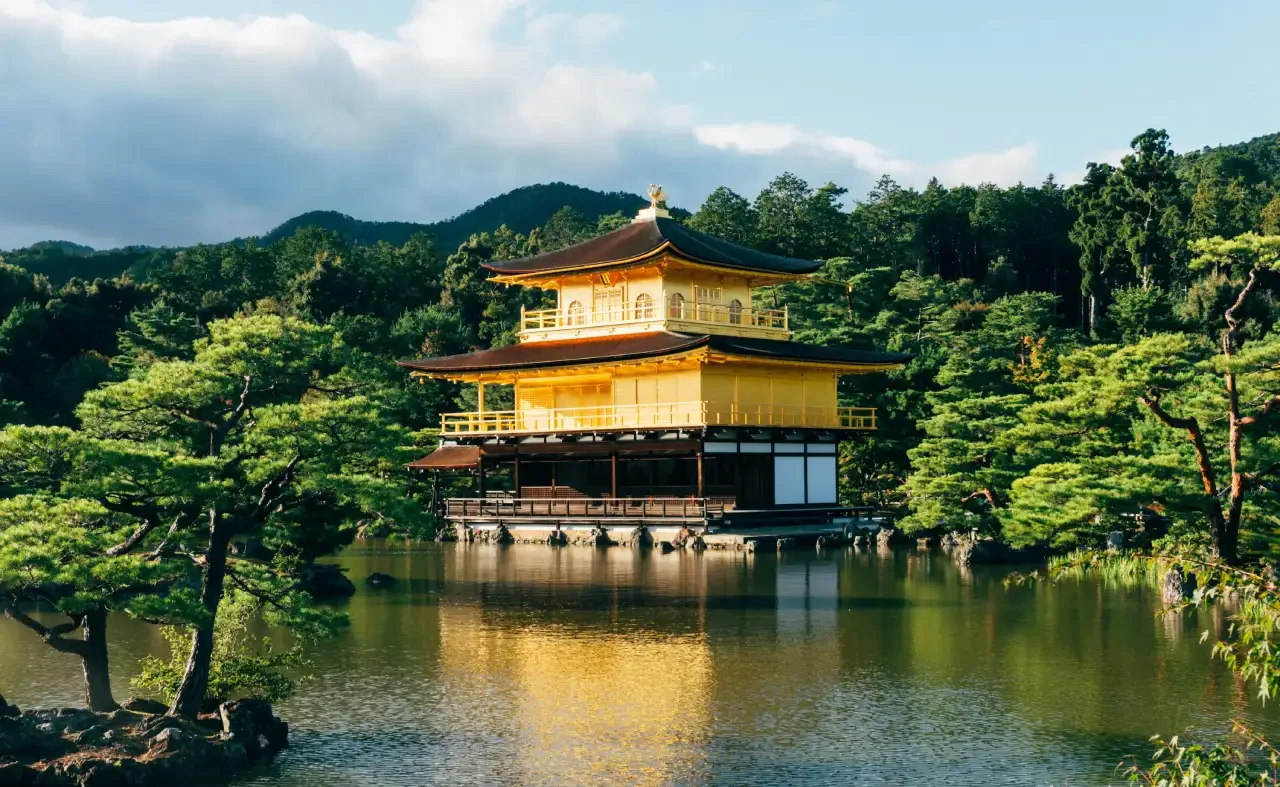
Photo by James Butterly: https://unsplash.com/@jamesbutterly
Unlike some temples that require a deeper cultural interest to fully appreciate, Kinkaku-ji is immediately impressive. The scenery is visually striking, the route is easy to follow, and the visit works well even for travelers with limited time in the city.
It’s also one of the best places in Kyoto to experience how architecture and nature are designed together. The pavilion changes completely depending on the weather and season, from bright reflections in summer to snow-covered landscapes in winter.
For many travelers, visiting Kinkaku-ji becomes one of the defining moments of their Kyoto trip simply because it captures the elegance, calmness and visual identity that people associate with Japan.
What Makes the Golden Pavilion Special?
The most distinctive feature of Kinkaku-ji is the pavilion itself, whose upper floors are covered in real gold leaf. The building stands beside Kyoko-chi Pond, creating the famous reflection that has made the temple one of the most photographed locations in Japan.
What many visitors do not realize before arriving is that the structure combines several different architectural styles. Each floor was designed with a different aesthetic influence, blending elements of aristocratic culture, samurai design and Zen Buddhist architecture into a single building. This gives Kinkaku-ji a unique appearance compared to other temples in Kyoto.
Another reason the temple feels so memorable is its carefully controlled scenery. The pavilion was positioned to interact perfectly with the pond, surrounding islands, trees and viewpoints along the walking path. The experience changes subtly as you move through the gardens, with the building appearing differently from every angle.
Kinkaku-ji is also unusual because of how strongly it changes with the seasons. In autumn, the gold contrasts with deep red maple leaves. In winter, snow covering the roof creates one of the most famous landscapes in Kyoto. On sunny days, the reflection on the water can feel almost unreal.
Despite its global fame and constant flow of visitors, the temple still manages to preserve a sense of stillness once you slow down and pay attention to the surrounding details. That balance between grandeur and quietness is part of what makes Kinkaku-ji stand out from many other famous landmarks in Japan.
History of Kinkaku-ji
Kinkaku-ji was originally built in the late 14th century as a retirement villa for shogun Ashikaga Yoshimitsu, one of the most powerful political figures of the Muromachi period. After his death, the villa was converted into a Zen temple following his wishes, eventually becoming one of Kyoto’s most important historic and cultural landmarks.
The temple has gone through several dramatic moments throughout its history. The current structure seen today is actually a reconstruction completed in 1955 after the original pavilion was destroyed in a fire in 1950. Despite this, the rebuilding carefully preserved the appearance and spirit of the historical design.
Over the centuries, Kinkaku-ji became closely associated with the image of Kyoto itself. Its architecture, surrounding gardens and lakeside setting helped shape the aesthetic ideals connected to traditional Japanese beauty and Zen-inspired landscape design.
The temple is officially known as Rokuon-ji, although most people refer to it simply as Kinkaku-ji, meaning “Temple of the Golden Pavilion.” The name comes from the spectacular golden exterior that made the building famous across Japan and eventually around the world.
Today, Kinkaku-ji is recognized as part of the Historic Monuments of Ancient Kyoto, a UNESCO World Heritage Site that includes some of the city’s most significant temples, shrines and cultural treasures.
What to See at Kinkaku-ji
Inside Kinkaku-ji, the visit is less about entering buildings and more about following a carefully designed walking route that reveals different perspectives of the pavilion and its surroundings. The main highlight is, of course, the Golden Pavilion itself, seen from the edge of Kyoko-chi Pond, where most visitors stop to take their first photos.
As you continue along the path, you’ll notice how the scenery is intentionally composed. Small islands in the pond, shaped rocks and scattered pines are placed to frame the pavilion from different angles. One of the most memorable views is when the gold structure appears partially hidden behind trees, creating a more subtle and natural composition.
Another detail worth paying attention to is the Shariden (the Golden Pavilion itself) from different floors. Although visitors cannot enter it, each level has a distinct architectural style that becomes more visible depending on your position along the route.
The route also passes through smaller elements that are often overlooked, such as stone lanterns, mini shrines and carefully maintained moss gardens. These details add depth to the visit and reflect the Zen aesthetic behind the temple’s design.
At the end of the walk, there is a small teahouse area and a souvenir space where you can pause before leaving. It’s a simple finish, but it gives a final moment to take in the calm atmosphere before returning to the more crowded streets of Kyoto.
The Gardens and Pond
The gardens at Kinkaku-ji are not simply a backdrop for the Golden Pavilion, but an essential part of how the entire site is experienced. Designed as a strolling garden (kaiyū-shiki teien), the layout encourages visitors to move slowly along a set path where each turn reveals a slightly different composition of water, trees and architecture.
At the center of it all is Kyoko-chi Pond, whose irregular shape and carefully placed islands create a sense of depth and balance. The pavilion was positioned specifically to interact with this water surface, so its reflection becomes part of the architecture itself rather than just a visual effect. Depending on the light and weather, the reflection can feel sharp and mirror-like or soft and fragmented.
The vegetation surrounding the pond is intentionally restrained. Pine trees dominate the landscape, many of them shaped over decades to achieve precise silhouettes that frame key viewpoints. Alongside them, moss, rocks and subtle seasonal plants add texture without competing with the main focal point.
What makes this garden particularly interesting is the balance between control and natural appearance. Every element has been placed with intention, yet the result never feels rigid. Instead, it creates a calm rhythm where nothing is rushed and every step along the path feels slightly different from the last.
By the time you reach the exit, the garden has already reshaped your perception of the pavilion multiple times. It is not just a single view or a single monument, but a sequence of carefully composed moments where architecture and nature continuously interact.
Best Photo Spots at Kinkaku-ji
The most iconic photo at Kinkaku-ji is taken from the main viewpoint right across Kyoko-chi Pond, where the Golden Pavilion appears fully framed against the water. This is the classic shot you’ll see in most guides, but the timing of your visit can make a big difference in how it looks.
Early morning tends to offer the calmest conditions, with fewer people and smoother water reflections. On sunny days, the gold exterior reflects strongly, creating a bright contrast with the surrounding pine trees and greenery. After rain, the colors deepen and the atmosphere becomes more muted, which can also produce very balanced compositions.
As you continue along the walking path, there are several secondary viewpoints that are often overlooked. From slightly angled positions, the pavilion is partially framed by branches or islands in the pond, creating a more natural and less “postcard” style image. These spots are useful if you want something different from the standard front-facing shot.
Near the far side of the route, there are also elevated points where you can capture the pavilion with more of the garden in the foreground. These angles highlight the relationship between the building and its landscape, rather than focusing only on the architecture itself.
Finally, winter offers a completely different photographic experience. When snow settles on the roof and trees, the contrast between white surfaces and gold leaf becomes much stronger, making it one of the most visually distinctive moments of the year at Kinkaku-ji.
How Long Does It Take to Visit?
A visit to Kinkaku-ji is relatively short compared to other major temples in Kyoto, mainly because the experience follows a single, well-defined walking route rather than a large complex you explore freely.
On average, most visitors spend around 45 to 75 minutes inside the grounds. This includes time to walk the full path around Kyoko-chi Pond, stop at the main viewpoints, take photos and move through the garden at a relaxed pace.
If you are visiting during peak hours or high season, the visit can take a bit longer simply due to crowd flow at the main viewing point. The path itself is one-directional, so movement is steady but sometimes slow when many people stop for photos at the same time.
For travelers who enjoy taking their time with photography or simply want to observe the details of the garden, it is easy to extend the visit closer to 90 minutes without feeling rushed. However, it is not a place that requires a full half-day unless you are combining it with nearby temples.
In terms of planning, Kinkaku-ji usually fits well as a half-day stop within a larger Kyoto itinerary, often paired with nearby sites in Northwest Kyoto such as Ryoan-ji or Ninna-ji.
Best Time to Visit Kinkaku-ji
The best time to visit Kinkaku-ji depends a lot on what kind of experience you’re looking for, since the atmosphere of the temple changes noticeably throughout the day and across the seasons.
Early morning is usually the most rewarding moment. The light is softer, the crowds are still light, and the reflection of the Golden Pavilion on Kyoko-chi Pond tends to look clearer and more balanced. It’s also when the walk through the garden feels calmer, allowing you to actually take in the details rather than just moving with the flow of visitors.
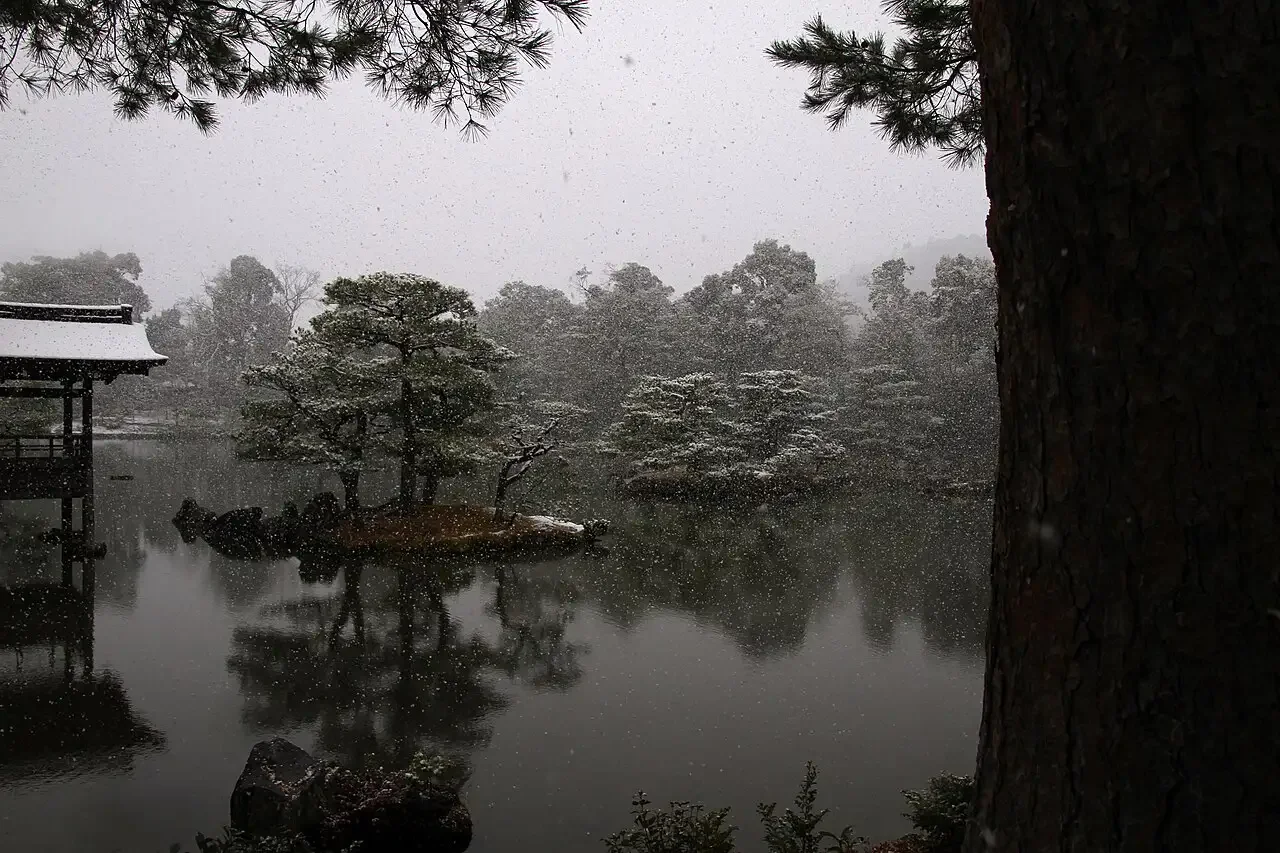
Photo by Publi Domain
Late afternoon can also be a good option, especially on clear days. The warm light enhances the gold exterior and gives the pavilion a slightly more dramatic look against the surrounding trees. However, this time tends to attract more visitors, so the experience can feel busier.
Seasonally, Kinkaku-ji is one of those places that genuinely changes character. Spring and summer bring deep greens and a brighter, more vibrant contrast with the gold. Autumn adds strong reds and oranges that frame the pavilion in a more intense way. Winter, especially after snowfall, is often considered the most striking, with the roof covered in white and the whole scene becoming much quieter and more minimal.
Overall, there isn’t a single “perfect” time, but if you want the most balanced experience between light, atmosphere and crowd levels, early morning outside peak season is usually the safest choice.
Kinkaku-ji in Autumn and Winter
Kinkaku-ji feels very different depending on the season, but autumn and winter are when the temple shows its most dramatic character. These two periods change not only the colors of the landscape, but also the overall atmosphere of the visit.
In autumn, the gardens around Kyoko-chi Pond become filled with deep reds, oranges and yellows. The contrast between the golden pavilion and the surrounding maple trees creates one of the most visually intense scenes in Kyoto. From different points along the walking path, the pavilion appears framed by autumn foliage, which makes the composition feel richer and more layered than in other seasons.
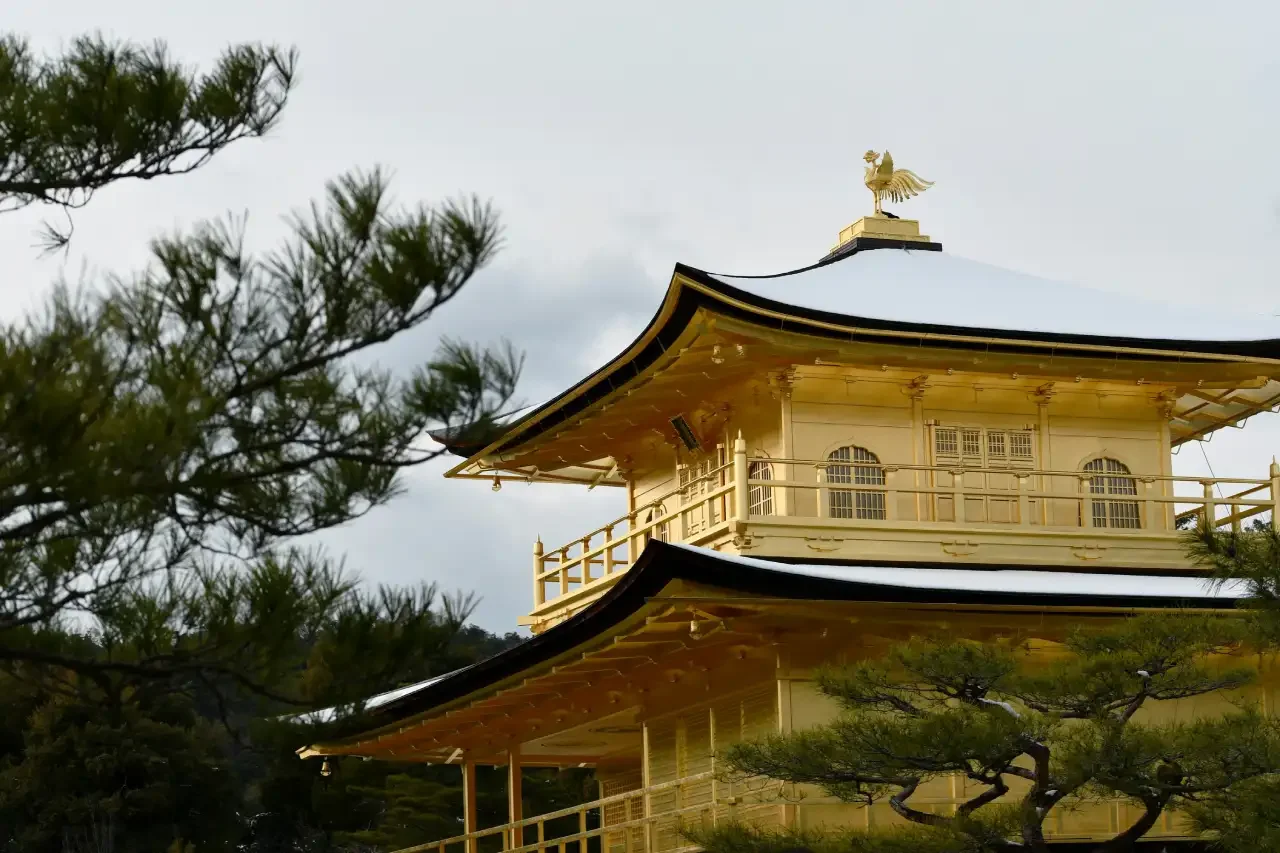
Photo by Max Harlynking: https://unsplash.com/@harlynkingm
Winter, on the other hand, brings a completely different mood. When snow settles on the roof of the pavilion and the surrounding pines, the entire scene becomes quieter and more minimal. The gold stands out more sharply against the white background, and the reflections on the pond often feel softer or partially frozen in appearance.
While both seasons are highly popular, they offer very different experiences. Autumn tends to feel more vibrant and full of visual detail, while winter is more restrained and peaceful, almost reducing the scene to its essential elements of gold, white and dark green.
In both cases, the walking route remains the same, but the perception of each viewpoint changes completely. This is part of what makes Kinkaku-ji worth revisiting, since the same path can feel like a different place depending on when you go.
How to Get to Kinkaku-ji
Kinkaku-ji is located in the northern part of Kyoto, in an area that is not directly connected to the subway network, so reaching it usually requires a combination of bus or taxi. Despite this, it is well integrated into the city’s public transport system and relatively easy to access from most central areas.
The most common way to get there is by bus from Kyoto Station or central Kyoto. Several city bus lines stop near the temple, with the final walk from the bus stop taking around 5 to 10 minutes through a residential area. This approach is the most straightforward and budget-friendly option for most visitors.

Photo by Pourya Gohari: https://unsplash.com/@_pourya_
Another option is to combine the subway with a short bus ride. You can take the Karasuma Line to stations like Imadegawa or Kitano-Hakubaicho, and then continue by bus or taxi. This can sometimes be faster depending on traffic conditions, especially during peak tourist hours.
Taxis are also a practical choice, particularly if you are visiting as part of a wider route through Northwest Kyoto. While more expensive, they can save time and avoid transfers, especially when visiting nearby temples like Ryoan-ji or Ninna-ji in the same day.
Because of its location, it is often grouped with other sites in the northern part of the city, making it ideal to include as part of a half-day itinerary through Northwest Kyoto rather than a standalone stop.
Entrance Fee and Opening Hours
Kinkaku-ji is a paid entry temple, and access is managed through a simple ticket system at the entrance. There is no need for advance booking, and tickets are purchased on arrival before entering the walking route.
The entrance fee is usually around 500 yen for adults, making it one of the more affordable major attractions in Kyoto. Children typically pay a reduced fee or enter at a lower cost depending on age.
The temple opens daily, generally from 9:00 AM to 5:00 PM, with last entry shortly before closing time. These hours can vary slightly depending on the season, so it’s always good to double-check if you are visiting during peak travel periods or public holidays.
Because the visit follows a single circular path, there is no time limit once you enter, but the flow of visitors naturally encourages a steady pace rather than long stops in one place.
In terms of planning, arriving earlier in the day not only improves the experience in terms of crowds and lighting, but also gives more flexibility to continue exploring nearby temples in Northwest Kyoto afterwards.
Things to Know Before Visiting
Kinkaku-ji is one of the most visited temples in Kyoto, so a bit of preparation can make the experience smoother and more enjoyable. The site is designed for a continuous one-way walking route, which means you won’t be able to go back once you move forward along the path.
Because of its popularity, it can get very crowded, especially around the main viewpoint over Kyoko-chi Pond. Visitors often stop here for photos, so movement can slow down during peak hours. Going early in the day usually makes a noticeable difference.
Nuki's Corner!
#The Phoenix on Top of Kinkaku-ji

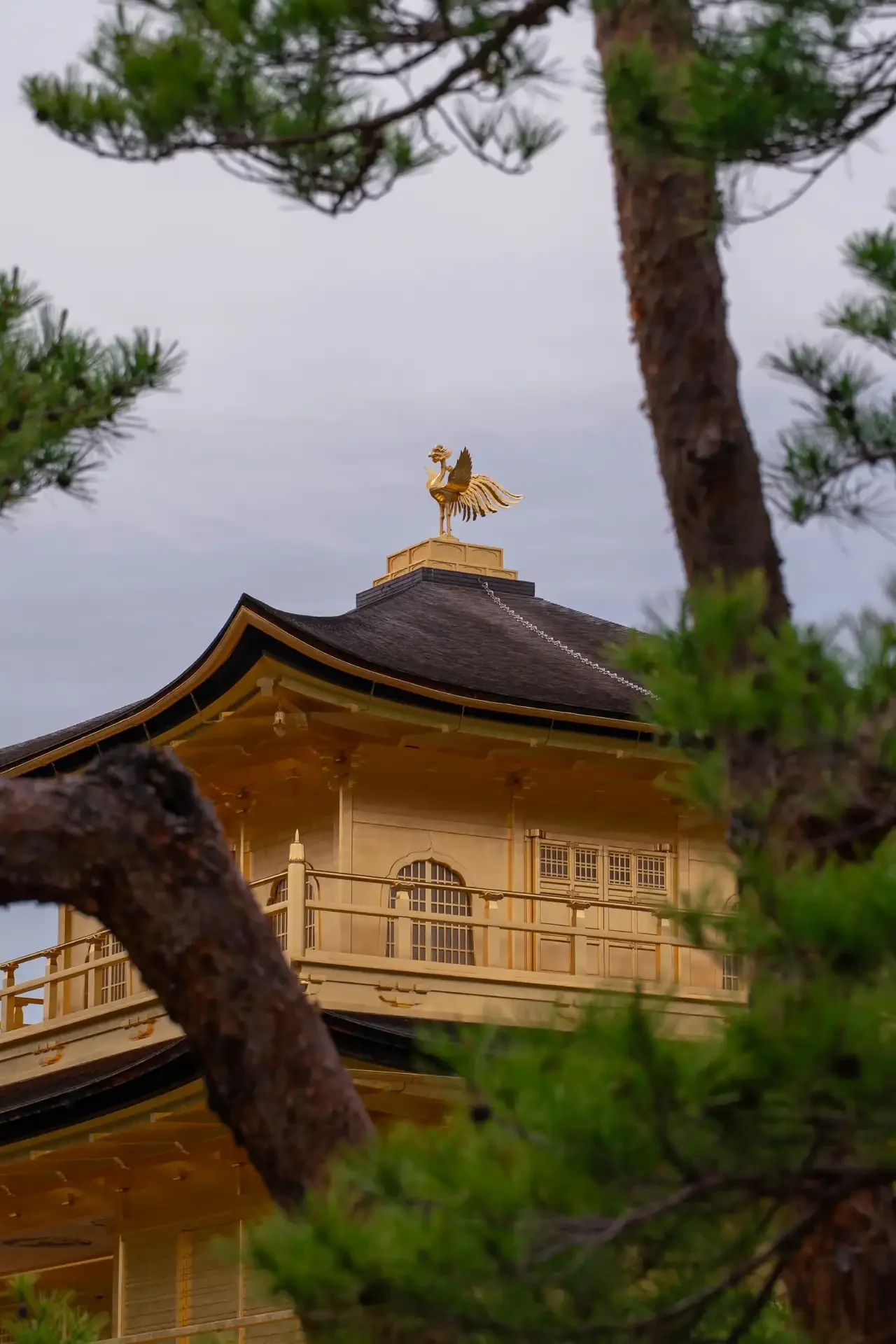
One of the most overlooked details of Kinkaku-ji is the golden phoenix perched on the roof. Known in Japanese as the Hōō, it symbolizes rebirth, harmony and imperial authority, fitting perfectly with the temple’s historical role as a place of power and refinement.
Most visitors focus entirely on the reflection and the gold-covered walls, but if you look closely from the main viewpoint, you can spot the phoenix sitting at the very top of the structure. It adds a final layer of meaning to the pavilion, almost like a crown completing the composition.
It’s a small detail, but it reinforces something important about Kinkaku-ji: nothing in its design is accidental, and even the smallest elements carry symbolic weight.

Photography is allowed, but tripods and anything that blocks the flow of visitors are not permitted. It’s a place where you’re expected to keep moving, even if you pause frequently to take in the views.
There are no restaurants inside the complex, only small souvenir and refreshment areas near the exit. It’s better to plan food stops before or after your visit rather than expecting to stay on-site for long.
Finally, the temple is quite easy to walk through, but it still involves a fair amount of standing and slow walking. Comfortable shoes and a relaxed pace will make the experience much better, especially if you are combining it with other temples in Northwest Kyoto on the same day.
Nearby Places Worth Visiting
Kinkaku-ji is located in Northwest Kyoto, an area that includes several important temples and quieter cultural spots that pair very naturally with a visit to the Golden Pavilion.
One of the closest and most recommended places is Ryoan-ji, famous for its minimalist Zen rock garden. While Kinkaku-ji is highly visual and reflective, Ryoan-ji offers a completely different experience focused on simplicity and stillness, making the contrast between the two especially interesting.

Related Article
Another nearby highlight is Ninna-ji, a large temple complex known for its spacious grounds and historical buildings. It tends to be less crowded, which makes it a good place to slow down after the busier atmosphere of Kinkaku-ji.
If you continue further north, you’ll also find Kitano Tenmangu Shrine, an important spiritual site dedicated to scholarship. It has a more local feel and is often combined with seasonal events and markets, depending on the time of year.
Together, these sites form a natural half-day or full-day route through Northwest Kyoto. Visiting them after Kinkaku-ji helps balance the experience, moving from one of the city’s most iconic landmarks to quieter spaces where you can explore at a slower pace.
Is Kinkaku-ji Worth Visiting?
Kinkaku-ji is absolutely worth visiting, especially if it’s your first time in Kyoto or Japan. It is one of those places that delivers exactly what you expect, but still manages to feel more impressive in person than in photos.
The main value of the visit comes from its visual impact and atmosphere, rather than depth or complexity. The combination of the Golden Pavilion, the reflective Kyoko-chi Pond and the surrounding gardens creates a scene that is instantly recognizable and carefully composed.
It is not a temple where you spend hours exploring interiors or hidden areas. Instead, the experience is focused, structured and relatively short, which actually makes it easier to include in a broader itinerary across Kyoto, especially in Northwest Kyoto.
Some travelers may find it busy or highly touristic, but even then, the design of the space ensures that the visit remains smooth and visually rewarding. The key is to approach it as a landscape experience rather than a traditional temple visit.
Overall, Kinkaku-ji stands out because it represents a specific idea of Kyoto’s beauty: controlled, reflective and seasonal. For most visitors, it is one of the essential stops in the city and a place that is difficult to skip once you are in the area.
Trinuki Travel Tips
Kinkaku-ji is a straightforward visit, but a few small decisions can noticeably improve the experience, especially given how structured the route and timing can be.
If possible, try to arrive early in the morning. Not only is it less crowded, but the light over Kyoko-chi Pond is softer, which makes the reflections of the Golden Pavilion more balanced and easier to appreciate. Late afternoon can also work, but it tends to be busier.
Take your time at the main viewpoints rather than rushing through the route. The visit is relatively short, but the way the garden is designed means that each angle offers something slightly different, especially as you move around the pond.
Related Article
Avoid treating it as just a photo stop. While the iconic shot is important, some of the more subtle moments come from the quieter sections of the path, where the landscape design and pine trees frame the pavilion in less obvious ways.
If you are planning to explore more of Northwest Kyoto, combine Kinkaku-ji with nearby temples like Ryoan-ji or Ninna-ji. This creates a more balanced half-day route and helps avoid feeling like the visit is too short or isolated.
Finally, keep expectations realistic in terms of crowd levels. It is one of the most visited sites in Kyoto, but the experience is still enjoyable if you focus on the flow of the garden rather than trying to wait for a completely empty view.
Related articles
No related articles yet.
About Kinkaku-ji (Golden Pavilion)
Quick facts
Location
Lat: 35.039400 Long: 135.729200
Opening hours
- Mon–Sun: 09:00–17:00
Open all year round Hours may change for special exhibitions.
Price
- General: 500 yen
- Primary and Middle School Students: 300 yen
- *There is no group discount, but if it is over 30 people please enter as a group.
- *The admission fee may change for special exhibitions.